

Culture of Peace — Cultuur van Vrede
Wars start in the mind, not on the battlefield. UNESCO built its founding charter on that idea in 1945. Over time, the phrase grew into a full policy concept: the Culture of Peace. This site carries the name, because that concept is our subject. Here is what it means, where it came from, and where it stands today.
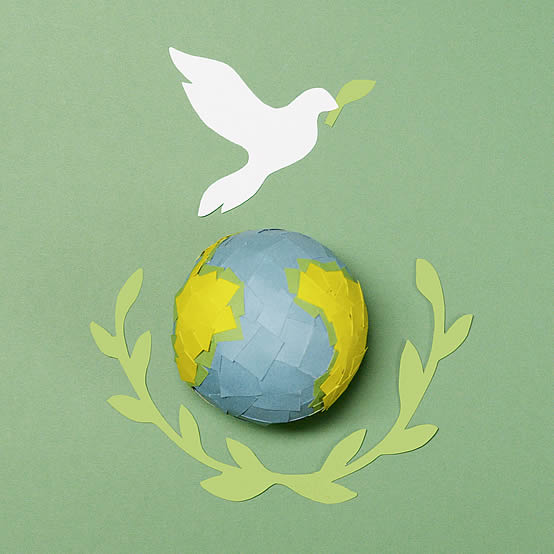
What the term means
A Culture of Peace is not simply the absence of war. It is a set of shared values, attitudes, and daily habits. Together, they help societies resolve conflict without violence. UNESCO groups this work into eight action areas. These include education for peace, human rights, gender equality, democratic participation, tolerance, free information, sustainable development, and disarmament. Governments, schools, and local groups apply these areas in practice. None of them work alone. Each depends on the others to build lasting peace.
UN Declaration and Programme of Action on a Culture of Peace (1999)
- Fostering a culture of peace through education
- Promoting sustainable economic and social development
- Promoting respect for all human rights
- Ensuring equality between women and men
- Fostering democratic participation
- Advancing understanding, tolerance and solidarity
- Supporting participatory communication and the free flow of information
- Promoting international peace and security
Where the idea came from
The concept took shape in 1989, at a congress held in Côte d’Ivoire. Scholars and leaders gathered around one question: how can peace be built to last? Their answer was clear. Peace needs active cultivation, not a one-time declaration. UNESCO responded in 1992 with its Culture of Peace Programme. Early projects ran in El Salvador, Mozambique, and Burundi, all recovering from conflict. In 1997, the UN General Assembly proclaimed the year 2000 the International Year for the Culture of Peace. In 1999, it adopted the Declaration and Programme of Action on a Culture of Peace. The following decade, 2001 to 2010, became the International Decade for a Culture of Peace and Non-Violence for the Children of the World. Nearly 76 million people signed a related pledge, the Manifesto 2000.
A fragile record
More than three decades on, the results are mixed. The Global Peace Index reported a sixth straight year of decline in 2025. Researchers counted 59 active state conflicts that year, the highest number since World War II. Conflict deaths and military spending both reached record levels. In other words, the programme exists, but the world it hoped to change has not followed. This gap is exactly why culture and peace advocates argue for stronger, better-funded action, rather than less.
Toward a Culture Goal
Culture ministers see a missing piece in global development policy. The 17 Sustainable Development Goals cover poverty, health, and climate. None of them address culture directly. At MONDIACULT, UNESCO’s world conference on cultural policy, ministers have pushed to close that gap. The 2022 Mexico City edition called culture a global public good. The 2025 edition, held in Barcelona, added Culture of Peace as a formal conference theme for the first time. From these meetings comes a growing campaign for SDG 18, a dedicated Culture Goal for the next development agenda, running from 2030 to 2045.
A day to mark it
Every year, the world observes the International Day of Peace on September 21. In 2024, the day’s theme was “Cultivating a Culture of Peace,” marking 25 years since the UN Declaration. Communities on every continent joined in: peace gardens opened, schools held dialogues, and vigils gathered after dark. The theme carried one message forward. Peace is not a single event. It is a practice, repeated daily, everywhere.
To learn more about the Culture of Peace, visit our main website, RYB Global Development, at redyellowblue.org/culture-of-peace.
Sources
- UN Declaration and Programme of Action on a Culture of Peace (1999): digitallibrary.un.org/record/285677
- International Day of Peace 2024 Toolkit, United Nations: un.org/en/observances/international-day-peace/2024/toolkit
- Culture of Peace, UNESCO overview: unesco.org/en/culture-peace-africa
- MONDIACULT 2025 Publications and Global Report, UNESCO: unesco.org/en/mondiacult/publications
- Mainstreaming the Culture of Peace, UNESCO: unesdoc.unesco.org/ark:/48223/pf0000126398
- Global Peace Index 2025, Institute for Economics and Peace: visionofhumanity.org/resources/
- Culture of Peace, RYB Global Development: redyellowblue.org/culture-of-peace